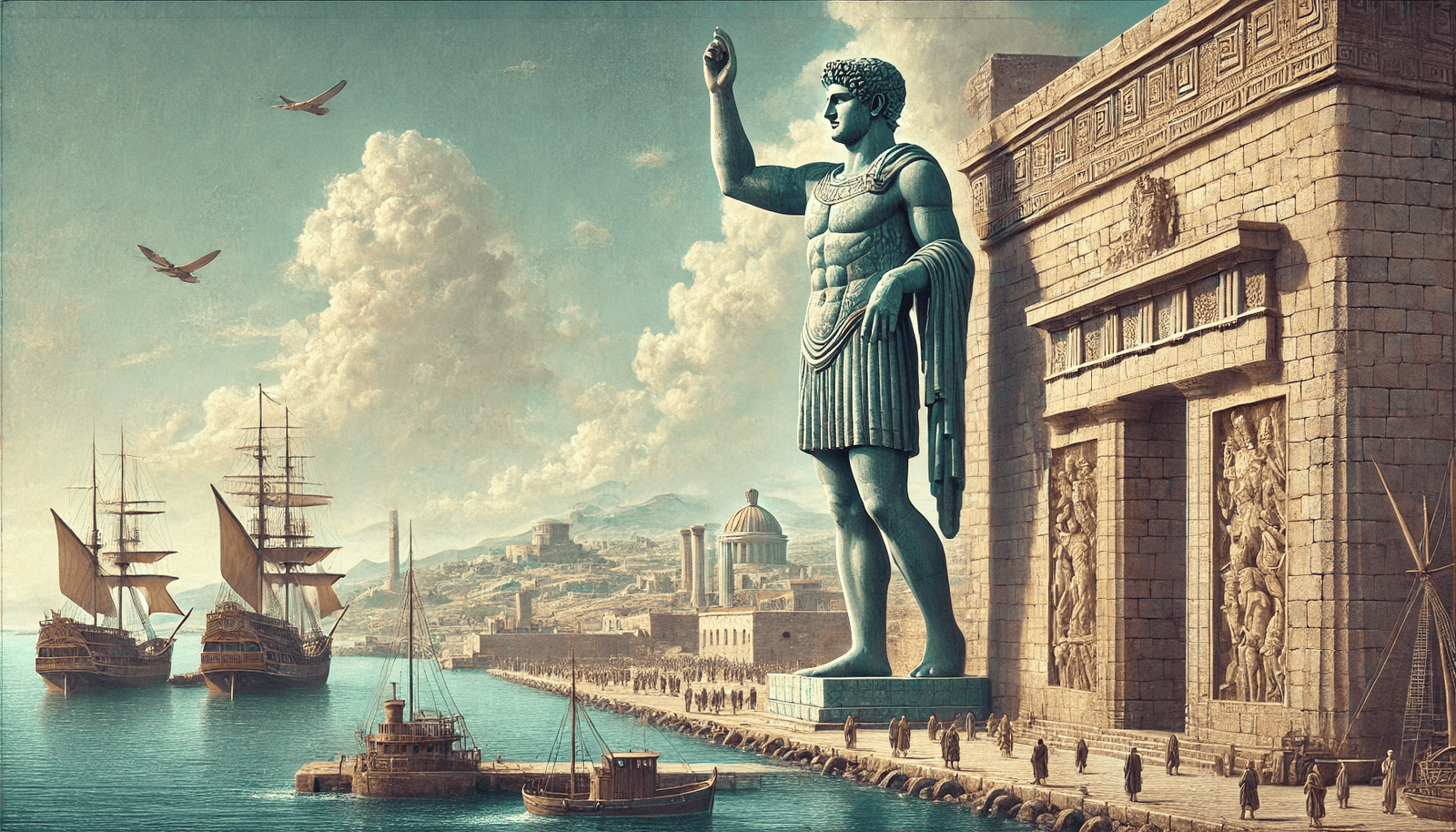
The Library of Alexandria is one of the most iconic symbols of knowledge in human history. Located in the ancient Egyptian city of Alexandria, it was said to house the collective wisdom of the ancient world. But its mysterious destruction has made it the subject of countless legends and debates. What was the Library of Alexandria, what treasures did it hold, and how did it vanish so completely?
The Birth of the Great Library
Founded in the 3rd century BCE during the reign of Ptolemy I or II, the Library of Alexandria was part of a larger research institution called the Mouseion (the Temple of the Muses). Alexandria was a bustling center of trade and culture, and its rulers envisioned a library that would collect every book, scroll, and piece of knowledge ever created.
The library’s collection reportedly included works from Greece, Egypt, India, Persia, and beyond. It is said that ships docking in Alexandria were required to surrender their manuscripts, which were copied, and the originals (or sometimes the copies) added to the library. Scholars, poets, scientists, and philosophers from across the ancient world were drawn to this intellectual hub.
What Did the Library Contain?
While no definitive catalog of the library’s contents exists, it was said to hold hundreds of thousands of scrolls—some estimates suggest up to 400,000 to 700,000 documents. These likely included:
•Greek philosophy: Works by Aristotle, Plato, and other great thinkers.
•Scientific discoveries: Mathematical texts by Euclid and astronomical theories by Aristarchus, who first proposed that the Earth orbits the sun.
•Histories of ancient civilizations: Records from Egypt, Babylon, and India.
•Lost works: It’s believed the library held texts that have since disappeared, including plays by Aeschylus and Sophocles, and ancient epics like those of Homer.
The sheer breadth of knowledge the library could have preserved is staggering.
The Mystery of Its Destruction
The Library of Alexandria’s destruction is one of history’s greatest mysteries. Who—or what—was responsible? The truth is murky, and historians debate multiple events that may have contributed to its loss.
1.Julius Caesar’s Siege of Alexandria (48 BCE):
During Caesar’s conflict with Pompey, he set fire to the ships in Alexandria’s harbor, and the flames may have spread to parts of the library. However, some sources suggest only a section of the library was damaged.
2.Christian and Roman Purges (4th Century CE):
As Christianity rose in power, pagan institutions like the Mouseion were often dismantled. Emperor Theophilus reportedly ordered the destruction of pagan temples in 391 CE, which might have included remnants of the library.
3.Muslim Conquest (7th Century CE):
Some accounts blame the Muslim invasion of Egypt for the library’s destruction, with Caliph Omar famously declaring, “If the books agree with the Quran, they are unnecessary; if they disagree, they are heretical.” However, this account is widely disputed and may be apocryphal.
Rather than a single catastrophic event, the library’s demise was likely gradual, with various rulers, wars, and cultural shifts contributing to its decline.
What Was Truly Lost?
The destruction of the Library of Alexandria represents more than the loss of books—it symbolizes the fragility of knowledge. Entire disciplines of ancient science, literature, and history may have been erased. Some speculate that humanity lost centuries of progress in fields like astronomy, medicine, and engineering.
For example:
•Could we have had earlier insights into the heliocentric model, later rediscovered by Copernicus?
•Did the library contain medical texts that could have advanced healthcare centuries earlier?
•Were there histories of now-lost civilizations that could fill gaps in our understanding of the ancient world?
The answers may never be known.
Legacy and Lessons of the Library
Despite its tragic end, the Library of Alexandria remains an enduring symbol of intellectual ambition and curiosity. It inspired other great libraries throughout history, such as the House of Wisdom in Baghdad during the Islamic Golden Age.
Today, the Bibliotheca Alexandrina, a modern library in Alexandria, seeks to honor the legacy of its ancient predecessor. Opened in 2002, it serves as a cultural and educational hub for global scholars.
The story of the Library of Alexandria reminds us of the importance of preserving knowledge. In an age of digital information, the threat of loss—whether from neglect, censorship, or disaster—remains real. Perhaps the greatest lesson is that humanity’s pursuit of learning must always be accompanied by vigilance to safeguard it.
Final Thoughts
The Library of Alexandria may be gone, but its legend lives on as a reminder of the power of knowledge and the tragedy of its loss. What secrets might still have been hidden within those scrolls? Could its destruction have delayed human progress by centuries? The answers remain one of history’s most tantalizing enigmas.
What do you think was the greatest loss from the Library of Alexandria? Share your thoughts below!