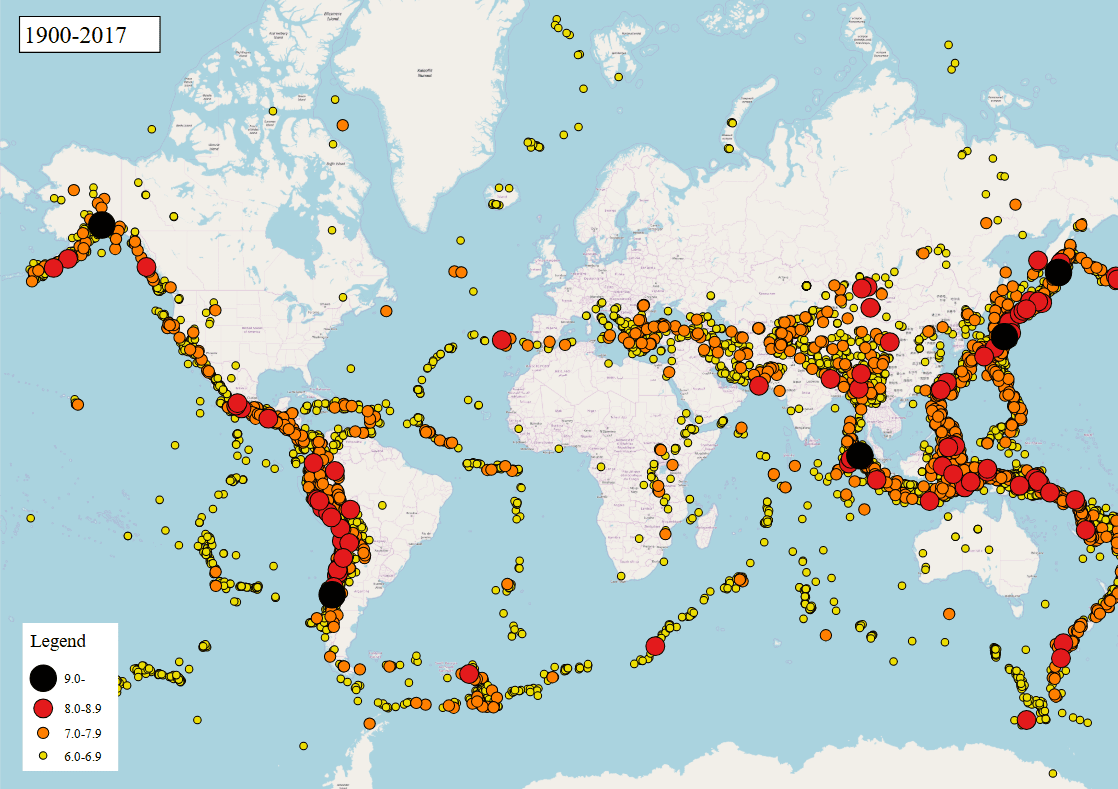

Top 10 Most Earthquake-Prone Countries Ranked by Magnitude
Earthquakes are among the most powerful and destructive natural disasters. Many countries lie along tectonic plate boundaries, making them especially vulnerable to seismic activity. Here’s a look at the top 10 countries frequently affected by earthquakes, ranked from the highest recorded magnitude to the lowest. At the end, we’ll explore which earthquakes caused the most damage and loss of life.
1. Chile – Magnitude 9.5
- Event: The 1960 Valdivia Earthquake remains the strongest earthquake ever recorded, with a magnitude of 9.5.
- Impact: This catastrophic event caused widespread destruction and a tsunami that reached as far as Hawaii, Japan, and the Philippines.
2. Indonesia – Magnitude 9.3
- Event: The 2004 Indian Ocean Earthquake (Sumatra-Andaman earthquake) had a magnitude of 9.3.
- Impact: It triggered a massive tsunami that affected 14 countries and killed over 230,000 people, making it one of the deadliest disasters in history.
3. Japan – Magnitude 9.1
- Event: The 2011 Tōhoku Earthquake reached a magnitude of 9.1.
- Impact: This earthquake caused a devastating tsunami and the Fukushima nuclear disaster. Over 15,000 people lost their lives.
4. United States (Alaska) – Magnitude 9.2
- Event: The 1964 Great Alaska Earthquake struck with a magnitude of 9.2.
- Impact: It caused extensive damage in Alaska and triggered tsunamis that impacted other regions.
5. Russia (Kamchatka) – Magnitude 9.0
- Event: The 1952 Kamchatka Earthquake recorded a magnitude of 9.0.
- Impact: It caused significant tsunamis but relatively low casualties due to the region’s sparse population.
6. China – Magnitude 8.0
- Event: The 2008 Sichuan Earthquake had a magnitude of 8.0.
- Impact: Over 87,000 people died, and millions were displaced, with extensive damage to infrastructure.
7. Mexico – Magnitude 8.0
- Event: The 1985 Mexico City Earthquake struck with a magnitude of 8.0.
- Impact: Thousands of buildings collapsed, and over 10,000 people died, highlighting the vulnerabilities of urban centers.
8. Philippines – Magnitude 7.7
- Event: The 1990 Luzon Earthquake recorded a magnitude of 7.7.
- Impact: It caused widespread damage, including landslides, and killed over 1,600 people.
9. Turkey – Magnitude 7.6
- Event: The 1999 İzmit Earthquake had a magnitude of 7.6.
- Impact: Over 17,000 people died, and thousands were left homeless due to the destruction of buildings.
10. Haiti – Magnitude 7.0
- Event: The 2010 Haiti Earthquake reached a magnitude of 7.0.
- Impact: Despite its lower magnitude compared to others on this list, the earthquake caused over 200,000 deaths and massive destruction due to poor infrastructure.
Which Earthquake Was the Deadliest?
While the largest earthquakes by magnitude caused extensive damage, the 2010 Haiti Earthquake led to one of the highest death tolls, with over 200,000 fatalities. This was largely due to the country’s inadequate infrastructure and lack of preparedness. On the other hand, the 2004 Indian Ocean Earthquake caused the most widespread destruction, impacting multiple countries and leaving millions displaced.
Conclusion
Earthquakes are unpredictable and devastating, often leaving behind a legacy of destruction. Countries in seismically active zones continue to develop mitigation strategies to reduce loss of life and infrastructure damage. While magnitude often correlates with power, the true measure of an earthquake’s impact lies in its human and societal cost.