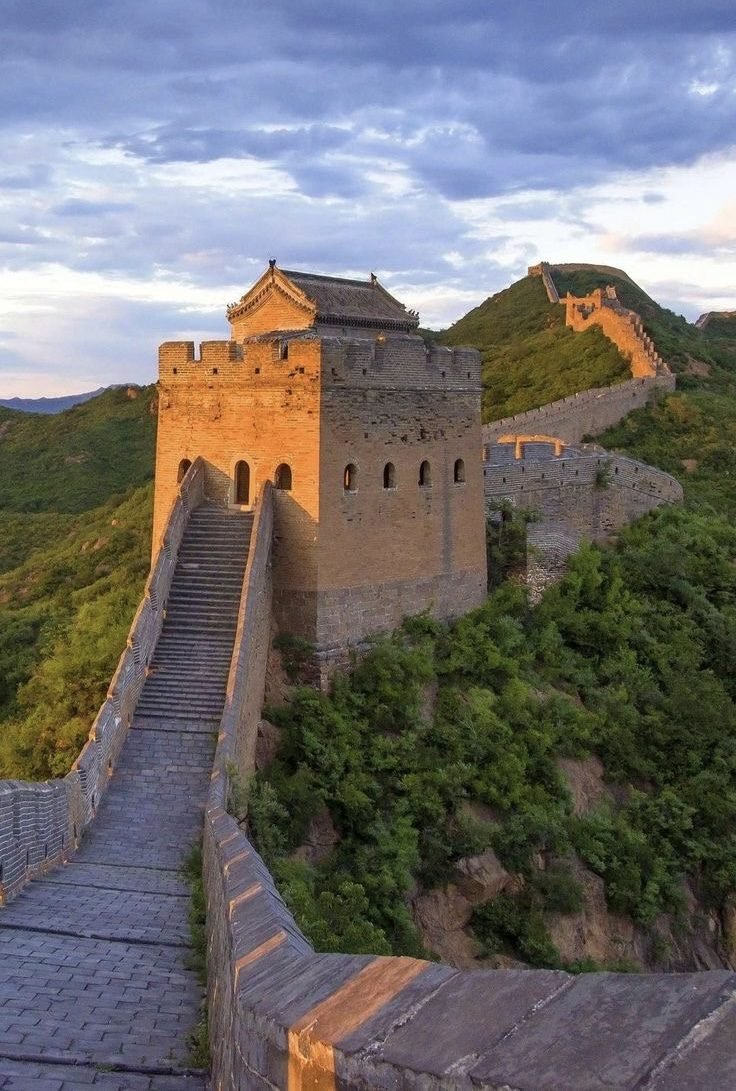

The Great Wall of China is an awe-inspiring feat of engineering that has stood the test of time for over two millennia. Spanning more than 13,000 miles across northern China, this ancient wonder was built to protect the Chinese Empire from invasions by nomadic tribes. Construction began as early as the 7th century BCE and continued through the Qin, Han, and Ming Dynasties, each contributing to the wall’s expansion and fortification. Today, the wall is not just a physical barrier but a symbol of China’s strength and resilience.
The Building Blocks of the Great Wall
What’s truly mind-blowing about the Great Wall is the sheer scale and ingenuity behind its construction. Made from locally available materials—bricks, tamped earth, and stone—the wall was designed to adapt to the rugged Chinese landscape. Workers, including soldiers, peasants, and prisoners, endured harsh conditions to build this monumental structure. The wall was fortified with watchtowers, signal stations, and gates, serving as both a defense mechanism and a symbol of imperial power. The Ming Dynasty’s additions, with its imposing watchtowers and signal stations, transformed the wall into an early warning system capable of signaling invasions across long distances with smoke and fire.
Cultural Impact Beyond Defense
The Great Wall’s role extends far beyond military defense. Over the centuries, it has become a cultural icon, representing resilience, endurance, and the indomitable spirit of the Chinese people. The wall’s image is deeply embedded in Chinese folklore, art, and modern national identity. It is a testament to human ingenuity, a reflection of the nation’s collective strength, and an enduring symbol of the Chinese will to survive and thrive. Despite centuries of natural erosion and looting, efforts have been made to preserve and restore the wall, ensuring that its legacy lives on. Today, the wall stands as a UNESCO World Heritage site, drawing millions of visitors annually who are fascinated by its history and majesty.
Maintaining the Great Wall has never been easy. Over time, it has faced numerous challenges, from natural erosion to the destructive effects of human activities. The wall was frequently attacked and required constant rebuilding. Modern threats include tourism and development, which put its integrity at risk. However, there is a renewed commitment to protecting and preserving the wall, with ongoing restoration projects and increased visitor education. The challenges faced by the Great Wall only add to its mystique, highlighting the enduring nature of this ancient wonder.
Enduring Legacy
The Great Wall of China is not just a marvel of ancient engineering; it is a powerful symbol of resilience and cultural heritage. Its construction, spanning several dynasties and involving millions of workers, tells the story of a civilization’s struggle to protect its identity and territory. The wall’s endurance through centuries of conflict, political changes, and natural challenges speaks volumes about the strength and determination of the Chinese people. Today, it continues to inspire awe, curiosity, and pride, serving as a bridge between the past and the present.
Final Thoughts
The Great Wall of China is much more than a defensive barrier; it embodies the spirit of a civilization and its quest for survival. It is a testament to the Chinese people’s ability to overcome adversity and adapt to changing circumstances. The wall’s history is a story of endurance, strength, and resilience—a true reflection of the indomitable human spirit. As it winds through the landscape, the wall serves as a living reminder of China’s rich cultural and historical identity, encouraging us to reflect on the power of perseverance and unity.
What are your thoughts on the Great Wall of China? Do you see it as a symbol of strength, a cultural heritage, or something more? Share your thoughts below! Would you like to learn more about the construction techniques used in building the Great Wall or its impact on Chinese culture?