
The Hanging Gardens of Babylon are one of the Seven Wonders of the Ancient World, described as a breathtaking oasis of lush greenery and cascading waterfalls. Yet, unlike the Great Pyramid of Giza or the Colossus of Rhodes, no definitive archaeological evidence of the gardens has ever been found. Did this wonder truly exist, or is it a legend that grew out of ancient storytelling?
Here’s everything we know—and don’t know—about the mysterious Hanging Gardens of Babylon.
What Were the Hanging Gardens of Babylon?
According to ancient accounts, the Hanging Gardens were built in Babylon, a city in Mesopotamia (modern-day Iraq), during the reign of King Nebuchadnezzar II (605–562 BCE). The gardens are said to have been created to please his wife, Queen Amytis, who missed the lush, green mountains of her homeland.
Descriptions by ancient writers like Strabo and Philo of Byzantium paint a vivid picture of the gardens:
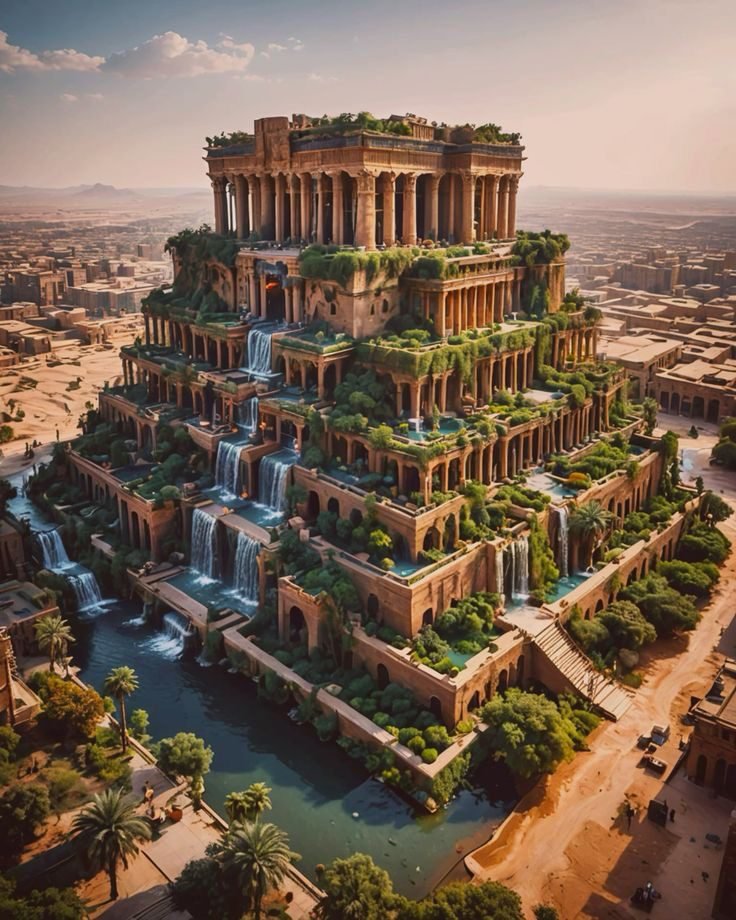
•Multi-level terraces filled with trees, flowers, and exotic plants.
•Ingenious irrigation systems that transported water to the upper levels.
•A breathtaking structure that resembled a green mountain rising in the heart of the desert.
The gardens reportedly showcased incredible engineering, with water lifted from the Euphrates River by an advanced system of pulleys or screws—a feat that would have been remarkable for its time.
Did the Gardens Really Exist?
Despite their fame, there’s no direct evidence the Hanging Gardens ever existed. Babylon, as a historical city, is well-documented, and many of its ruins have been excavated, but no trace of the gardens has been found. This raises the question: were they real, or were they a poetic creation?
Theories About the Hanging Gardens
1.A Wonder of Babylon:
Most historical accounts attribute the gardens to King Nebuchadnezzar II. He was known for his architectural projects, including the Ishtar Gate and the great walls of Babylon. If anyone had the resources and ambition to create such a wonder, it would have been him. However, no Babylonian texts mention the gardens, and excavations of Babylon have revealed no evidence of such an elaborate structure.
2.A Misplaced Wonder – Were They in Nineveh?
Some historians believe the gardens might not have been in Babylon at all but rather in Nineveh, the Assyrian capital. King Sennacherib of Assyria (704–681 BCE) was known for his impressive gardens and advanced waterworks. He even described a system of aqueducts and canals in inscriptions found in Nineveh. Could later historians have confused Babylon with Nineveh?
3.A Mythical Creation:
Another theory is that the gardens were an exaggerated tale or entirely fictional. Ancient Greek writers, who never saw the gardens themselves, may have created an idealized vision of an Eastern paradise based on secondhand accounts.
Engineering Marvel or Impossibility?
If the Hanging Gardens were real, the logistics of their construction would have been extraordinary. Historians and engineers have speculated about how they might have worked:
•Terraced Architecture: The gardens were likely built on stepped terraces, supported by stone columns and arches.
•Irrigation Systems: The most remarkable feature would have been the ability to transport water uphill. Some suggest the use of a primitive Archimedes screw, an advanced water-lifting device for its time.
•Structural Challenges: Building such a lush garden in a hot, arid climate would have required constant water flow, strong foundations, and innovative techniques to prevent soil erosion.
The sheer complexity of these requirements is part of why many scholars question the gardens’ existence.
What Ancient Sources Say
Much of what we know about the Hanging Gardens comes from secondary sources written centuries after they were supposedly built. For instance:
•Berossus (3rd century BCE): A Babylonian priest who described the gardens as part of Nebuchadnezzar’s efforts to please his wife.
•Strabo and Philo: Greek historians who gave detailed, though likely romanticized, descriptions of the gardens.
•Herodotus: The famous Greek historian never mentioned the Hanging Gardens, which is surprising given his detailed accounts of Babylon.
The lack of Babylonian records combined with the reliance on Greek and Roman accounts adds to the uncertainty about their existence.
Legacy and Symbolism
Whether the Hanging Gardens were real or imagined, their legacy is undeniable. They symbolize human ingenuity, the desire to create beauty even in harsh environments, and the pursuit of architectural and engineering excellence. The idea of a lush, man-made paradise has inspired countless stories, paintings, and gardens throughout history.
The Modern Search for the Gardens
Archaeologists and historians continue to search for evidence of the Hanging Gardens. Excavations at Babylon and Nineveh have revealed incredible structures, but none that definitively match the descriptions of the gardens. Despite this, the mystery only adds to their allure, keeping the Hanging Gardens alive in the imagination of people worldwide.
Final Thoughts
The Hanging Gardens of Babylon remain one of history’s most fascinating enigmas. Were they an actual architectural wonder, or are they a poetic symbol of humanity’s longing to bring nature into urban life? Until conclusive evidence is found, their true story will remain shrouded in mystery.
What do you think? Did the Hanging Gardens exist, or are they a beautiful legend? Let us know in the comments!