
The Pyramids of Giza have stood as awe-inspiring wonders for over 4,500 years, but their construction remains one of history’s greatest mysteries. How did ancient Egyptians—without modern machinery—create these colossal structures? The answer is as complex as it is fascinating, and recent research has unearthed surprising new clues.
Here’s a breakdown of the mind-boggling methods behind the creation of these iconic monuments. The truth will leave you speechless.
The Unimaginable Feat: Moving 2.3 Million Stones
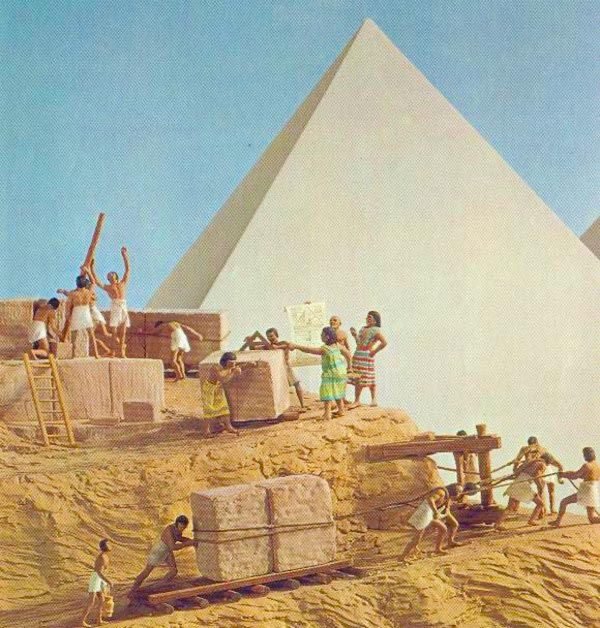
Each pyramid, like the Great Pyramid of Giza, was made using approximately 2.3 million limestone and granite blocks, some weighing up to 80 tons. But how were they transported?
Forget rolling logs or slave labor myths—recent discoveries suggest the Egyptians mastered water engineering. Researchers found evidence of an elaborate system of canals and water channels that helped float heavy blocks closer to the construction site. This ingenious solution may have been the key to moving the seemingly immovable.
The precise alignment of the pyramids with celestial bodies like Orion’s Belt is no accident. Advanced tools, such as plumb bobs, wooden levels, and sighting instruments, were used to ensure laser-like precision.
But the biggest mystery? The pyramid’s perfect angles and straight edges. How did they cut stone so finely? Some experts believe they used copper saws with abrasive sand to slice through limestone. Others suggest even more advanced techniques we still don’t fully understand.
The Secret Behind the Pyramid’s Height: Ramps or Something Else?
The traditional theory suggests massive ramps were used to drag stones up the pyramid, but new evidence challenges this idea.
A French architect, Jean-Pierre Houdin, proposed the “internal spiral ramp theory.” According to this model, workers constructed a ramp inside the pyramid to haul stones upward. This would explain the efficient design while avoiding the impracticality of mile-long external ramps.
Hidden Chambers and the Pharaoh’s Final Puzzle
Advanced technology like ground-penetrating radar continues to reveal new secrets hidden within the pyramids. In 2017, researchers uncovered a vast void above the Grand Gallery in the Great Pyramid. This mysterious space has no clear purpose—could it be a storage area, or a room designed to relieve structural pressure? Or is it something more enigmatic?
Was There a Workforce or Slave Labor? The Truth Will Shock You
Contrary to popular belief, the pyramids were not built by slaves. Excavations have unearthed evidence of well-fed workers and skilled laborers who took pride in their craft. Housing remains near the pyramid suggest a thriving worker’s village, with bakeries, breweries, and even medical facilities. These builders were highly respected, not subjugated.
Why Do These Mysteries Still Baffle Experts?
The pyramids continue to puzzle us because they represent a level of sophistication that seems almost out of place in ancient history. Were the Egyptians simply technological geniuses ahead of their time? Some fringe theories even speculate alien intervention—but mainstream science attributes their success to ingenuity, teamwork, and the relentless pursuit of perfection.
Final Thoughts: A Legacy That Defies Time
The Egyptian pyramids stand as a testament to human determination and innovation. Whether through water transport, spiral ramps, or other groundbreaking techniques, the builders of the pyramids achieved what many thought was impossible.
And yet, so much about them remains unknown. As technology advances, new discoveries may bring us closer to understanding their secrets—but for now, the pyramids continue to mystify, inspire, and leave us wondering: Did ancient Egyptians know something we don’t?
What do you think? Could there still be secrets about the pyramids waiting to be uncovered? Let us know your thoughts below!