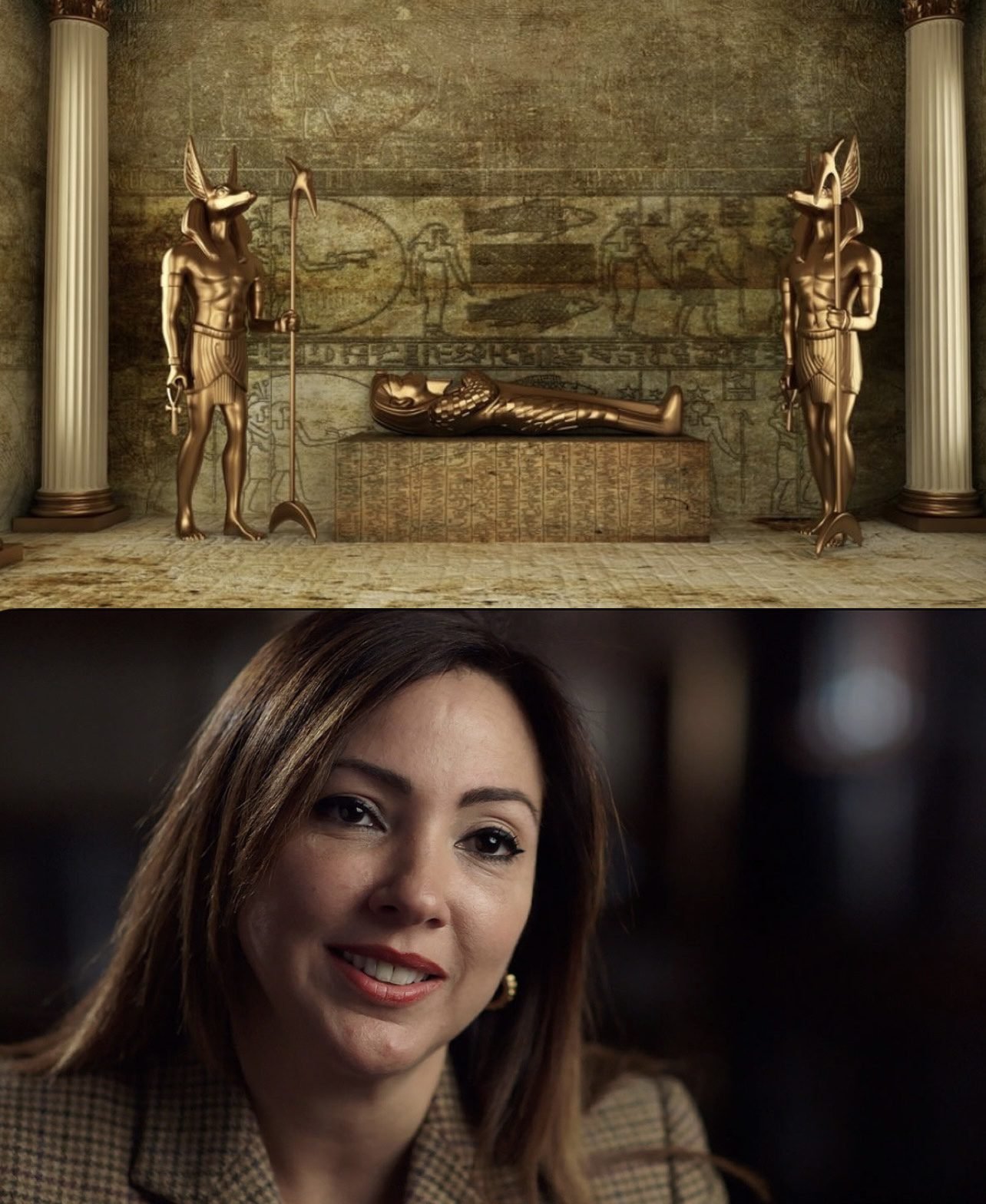

The search for Cleopatra’s tomb has long captivated historians, but Dominican archaeologist Dr. Kathleen Martinez may be on the brink of solving this ancient mystery. Her groundbreaking work at the Taposiris Magna site near Alexandria, Egypt, has revealed remarkable finds, including an underwater excavation that recently uncovered new sculptures and relics.
A Monumental Underwater Discoverygg
In her ongoing exploration, Dr. Martinez’s team unearthed a series of sculptures in a submerged section of the Taposiris Magna site. These artifacts were discovered in a complex network of tunnels and structures partially submerged beneath the Mediterranean Sea. The sculptures include headless statues, coins depicting Cleopatra and Alexander the Great, and carved alabaster heads believed to be of the Ptolemaic period.
These discoveries highlight the significant cultural and political symbolism associated with Cleopatra’s reign and further substantiate Martinez’s theory that Cleopatra’s tomb lies in this area. The underwater excavation also revealed pottery and a limestone block, hinting at the possibility of ceremonial uses in the region
The Tunnel of Wonders
The excavation site, located approximately 60 kilometers southwest of Alexandria, is centered around a massive 4,281-foot-long tunnel buried 13 meters underground. Archaeologists have described this structure as an engineering marvel, and its submerged portions have presented unique challenges, requiring collaboration with divers and advanced underwater technology
A Decades-Long Pursuit
Dr. Martinez has dedicated nearly two decades to the search for Cleopatra’s final resting place. Driven by her passion for the enigmatic queen, she has endured skepticism from colleagues and personal sacrifices, including relocating her life to Egypt. Despite this, her discoveries have been extraordinary, ranging from religious relics and statues to the recently unearthed underwater sculptures.
Why This Discovery Matters
Cleopatra, the last queen of Egypt, represents a bridge between ancient Egyptian and Greco-Roman cultures. If Martinez’s theory is correct, the discovery of Cleopatra’s tomb could rival the historical significance of King Tutankhamun’s tomb, potentially rewriting what we know about her reign, burial practices, and the political dynamics of her time.
Cleopatra’s Prophecy and Martinez’s Triumph
According to legend, Cleopatra once declared that “no man will find my tomb.” For centuries, her final resting place has eluded historians, explorers, and archaeologists. Now, after nearly two millennia, Dr. Kathleen Martinez—a determined and visionary woman—is the closest anyone has come to unlocking Cleopatra’s final mystery. If successful, Martinez will prove that Cleopatra’s prophecy held true in the most poetic way.