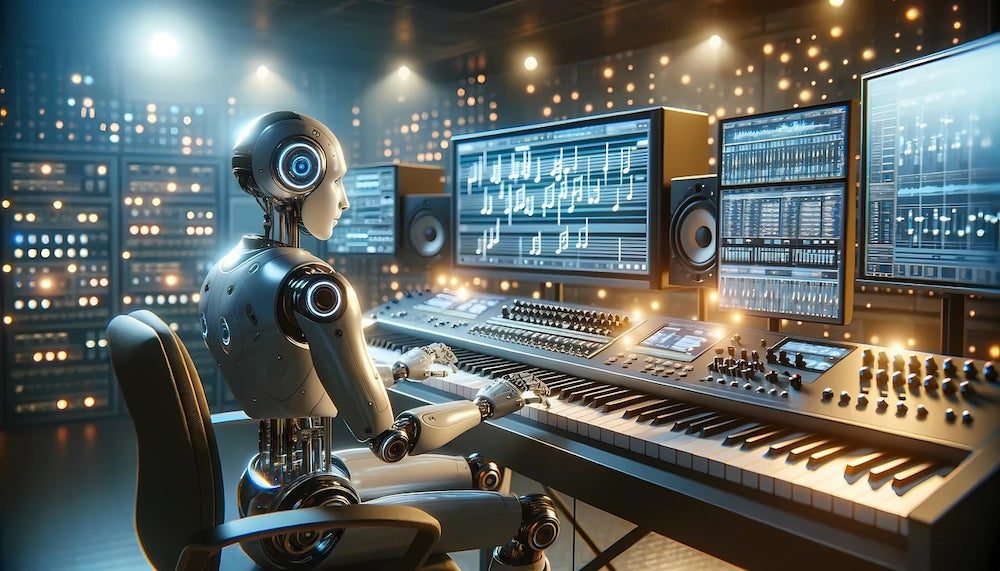

The music industry is undergoing a seismic transformation with the rise of artificial intelligence (AI) tools, which are changing how music is created, produced, and consumed. AI is no longer just a back-end tool for recommendation algorithms; it has become a creative partner, offering artists and producers innovative ways to experiment with sound, streamline workflows, and even generate complete compositions. Let’s delve into how AI is revolutionizing music and what this means for the future of the industry.
AI as a Creative Tool
AI platforms such as AIVA, Amper, and OpenAI’s Jukebox have democratized music creation. These tools allow users to compose music with minimal technical skills, offering pre-set styles, virtual instruments, and even fully orchestrated tracks. For producers, AI acts as a creative assistant, generating ideas, suggesting chord progressions, and creating complex soundscapes that might take hours to produce manually.
•Example: Amper Music enables users to generate royalty-free music in minutes by selecting genres, tempos, and moods. This tool has become a favorite for content creators looking for cost-effective, customizable background music.
AI in Sound Design and Production
Producers are leveraging AI to fine-tune their tracks, using machine learning algorithms to analyze audio and enhance its quality. Tools like LANDR and iZotope Ozone use AI to automate mastering, allowing producers to focus on creativity rather than technicalities.
•Impact: AI reduces the learning curve for new producers, making professional-grade sound more accessible. However, it also raises questions about whether these automated processes might dilute the artistry of manual production.
AI-Generated Songs: Creativity or Controversy?
One of the most contentious uses of AI in music is the generation of full tracks. In April 2023, an AI-generated song mimicking Drake and The Weeknd went viral, sparking debates about originality, copyright, and the ethics of AI-generated art.
•Key Issues:
•Copyright: Who owns an AI-generated song? Is it the user, the developer of the AI, or no one at all?
•Authenticity: While AI can mimic existing styles, critics argue that it lacks the emotional depth and intent of human-created music.
AI in Live Performances
AI is also finding its place on stage. Artists like Björk and Holly Herndon have incorporated AI-generated visuals and vocals into their performances, pushing the boundaries of live music.
•Case Study: Björk’s Cornucopia tour featured AI-generated visuals that responded to her music in real-time, creating a multi-sensory experience for the audience.
Challenges and Ethical Questions
While AI offers exciting possibilities, it also raises critical concerns:
1.Job Displacement: As AI takes over tasks like mastering and composition, what does this mean for human musicians and sound engineers?
2.Authenticity: Can music created by algorithms convey genuine emotion?
3.Regulation: With AI’s ability to mimic existing artists, how can the industry regulate copyright and intellectual property?
The Future of AI in Music
As AI technology advances, its role in music will likely expand. Some predict a future where AI becomes a full-fledged collaborator, capable of creating entirely new genres of music. However, striking a balance between technological innovation and artistic integrity will be key.
Takeaway
AI is not replacing musicians—it’s augmenting them. By automating repetitive tasks and offering creative inspiration, AI is empowering artists to focus on what truly matters: storytelling and emotional connection. As this technology evolves, it will be fascinating to see how the industry navigates the opportunities and challenges it presents.
Would you like to explore tools, artist examples, or specific AI technologies in more depth? Let me know!